
Most Durable Flooring That Looks Like Wood for Active Homes
April 10, 2026 | By Bruce® Flooring Experts
Hardwood flooring remains the gold standard by most accounts.
Homeowners love the warmth, natural character, and timeless style that only real wood can bring to a home.
And it’s not just a design preference. Hardwood floors remain one of the most sought-after features in real estate because they support long-term value and broad appeal to buyers.
In fact, studies show that roughly two-thirds of homeowners (66%) prefer wood flooring in their dream home, and 87% of homebuyers say hardwood floors are the most desirable feature when shopping for a home. Many buyers are even willing to pay more for a home with hardwood already installed, according to the National Wood Flooring Association.
But as popular as hardwood is, it’s not always the best choice for every homeowner.
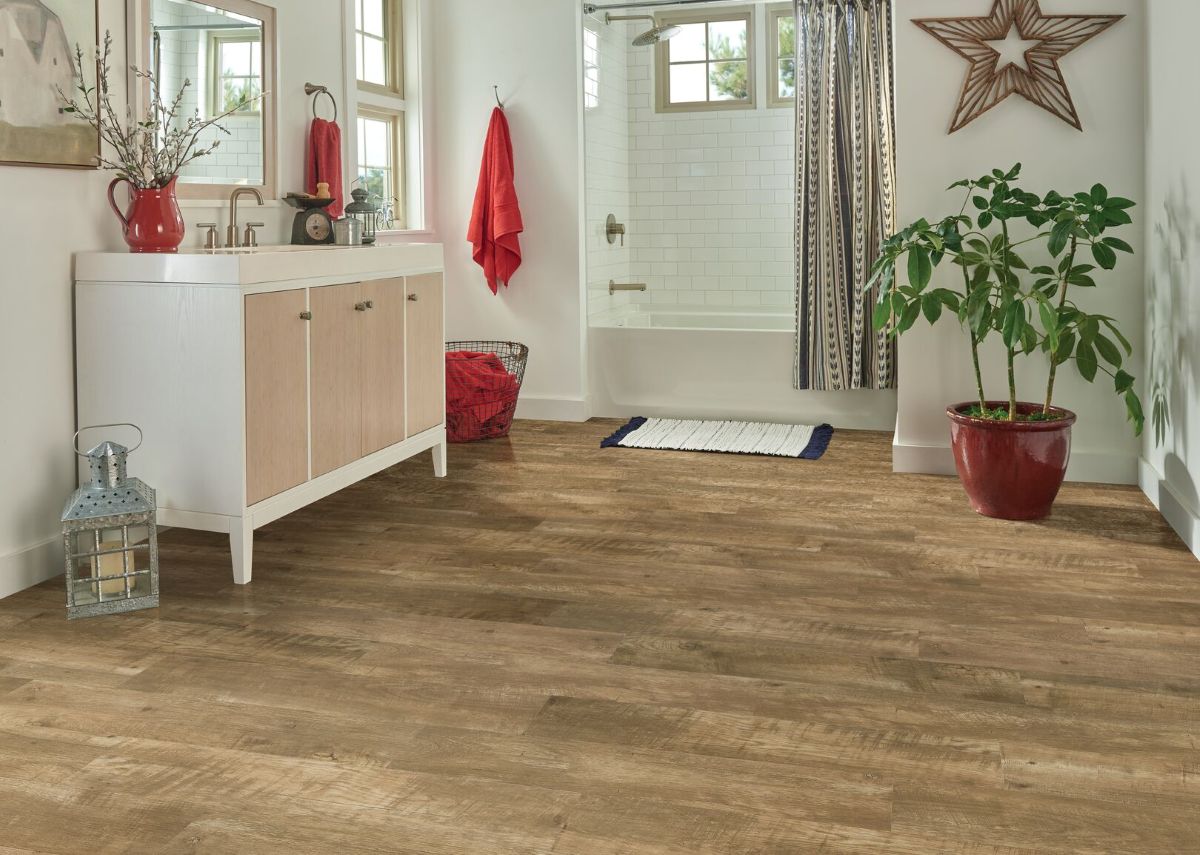
Luxury Vinyl Plank (LVP) is moisture-resistant, helping prevent warping or mold growth, while its easy-to-clean surface is ideal for high-traffic, splash-prone areas like bathrooms.
Hardwood Has Some Drawbacks
Hardwood doesn’t always fit real life. Even small amounts of moisture and everyday wear can shorten its lifespan in certain rooms.
Between pets, kids, water exposure, furniture movement, and everyday wear, many homeowners are looking for something that delivers the same warm-wood aesthetic with greater durability.
The good news is you have more options than ever. Today’s flooring innovations allow homeowners to achieve the look of wood in spaces where traditional hardwood may struggle.
This guide covers the most durable wood-look flooring options available today.
Key Takeaways
- Hardwood remains the most desired flooring look, but it can fall short in moisture-prone or high-traffic spaces where scratches, dents, and spills are everyday occurrences.
- Wood-look flooring has surged in popularity because it delivers the warmth of wood visuals with improved durability and easier maintenance.
- Wood-look porcelain tile offers the greatest resistance to water and scratches, making it a strong option for bathrooms, mudrooms, and entryways.
- Luxury Vinyl Plank (LVP) is a popular wood-look alternative because it balances water resistance, scratch resistance, comfort, and DIY-friendly installation.
- If you want real hardwood, Bruce offers two engineered wood options designed for modern homes: Dogwood Pro™ and Hydropel®.
Why Wood Flooring Is Still the Popular Choice
There’s a reason hardwood continues to outperform trends.
Wood flooring works in almost every design style, from farmhouse and traditional to modern, coastal, and Scandinavian. It also creates visual continuity throughout a home, especially in open floor plans.
But wood’s popularity is not only about appearance. Homeowners consistently choose it because it feels premium and livable.
“Wood flooring has remained a top choice because it delivers something that never goes out of style: natural warmth, authenticity, and long-term value. Homeowners want their floors to feel timeless, not trendy.”
– Devon McGrorty, Marketing Manager at AHF.
Advantages of Hardwood Flooring
Hardwood also offers functional advantages:
- It’s easier to clean than carpet
- It can improve indoor air quality for allergy-sensitive households
- You can refinish solid hardwoods and many engineered hardwoods
- It adds resale value and buyer appeal
So why are so many homeowners now searching for wood-look flooring?
Because hardwood has limits.
Hardwood Flooring Concerns
Despite their inherent beauty, wood floors raise concerns that make some homeowners hesitant to install them.
Scratches From Pets and Furniture
Dog nails, chair legs, and daily movement can leave visible scratches. Some species and finishes hold up better than others, but no hardwood is completely scratch-proof.
Water and Moisture Damage
Hardwood doesn’t respond well to standing water, repeated spills, wet boots, or humidity swings. That becomes a concern in:
- Kitchens
- Mudrooms
- Bathrooms
- Basements
- Laundry rooms
Dents and Impact Damage
Hardwood can dent from dropped objects, heavy furniture, or high heels, especially if the wood is softer.
Maintenance Expectations
Some homeowners expect hardwood to behave like tile or vinyl. But wood is a natural material. It expands and contracts. It needs care. It can also show wear over time.
“Hardwood is incredibly durable, but it is still a natural material. Moisture and impact are the two biggest challenges. If homeowners want wood visuals in spaces where water or heavy wear is common, wood-look alternatives can offer better performance.”
– Travis Bjorkman, Principal Scientist for Wood, AHF.
That’s precisely why wood-look flooring has become a top solution.
Why Wood-Look Flooring Is in High Demand
Wood-look flooring has surged in popularity because it addresses a specific need.
People want the look of hardwood, but they want something that is:
- More water-resistant
- More scratch-resistant
- Easier to maintain
- Easier to install
- More affordable in some cases
Modern manufacturing has made wood-look materials far more realistic than they were a decade ago. High-resolution printing and texture embossing can now mimic knots, grain patterns, and color variation so convincingly that many homeowners cannot tell the difference until they touch the floor.
“Homeowners still want wood. That preference hasn’t changed. What’s changed is the expectation that flooring should withstand the demands of busy lifestyles. Wood-look products are popular because they give people the design they want with fewer compromises.”
– Devon McGrorty, Marketing Manager at AHF.
So what are the most durable options?
Here’s a side-by-side comparison of popular wood-look flooring types based on performance factors homeowners care about most.
| Flooring Type | Water Resistance | Scratch Resistance | Dent Resistance | Installation Complexity |
| Wood-Look Porcelain Tile | Waterproof | Very High | Very High | Higher |
| Luxury Vinyl Plank (LVP) | High to Waterproof (varies by product) | High | Moderate to High | Moderate |
| Strand-Woven Bamboo | Moderate (varies by finish) | High | High | Moderate |
| Wood-Look Laminate | Moderate (varies by product) | High | Moderate | Low to Moderate |
| Engineered Hardwood (Dogwood Pro) | Moderate | Moderate | Moderate | Moderate |
Note: Performance may vary based on product construction, wear-layer thickness, and installation quality.
The Most Durable Flooring That Looks Like Wood
If you love the look of hardwood but need something that can better handle daily wear, you’re not alone. Many homeowners want the warmth and character of wood but also need flooring that withstands scratches, dents, moisture, and heavy foot traffic.
That’s precisely why wood-look flooring has become so popular. Today’s top alternatives replicate real wood grain and texture while delivering stronger performance in high-traffic spaces such as kitchens, entryways, bathrooms, and busy family rooms.
Below are the most durable wood-look flooring options.
1. Wood-Look Porcelain Tile
If durability is your top priority, porcelain tile is the strongest option. You can explore the Delicate Expressions™ wood-grain porcelain tile collection from Robbins®, another AHF brand.
Porcelain tile is known for being:
- Extremely scratch-resistant
- Waterproof
- Stain-resistant
- Resistant to dents and impact
- Ideal for heavy traffic
That makes it one of the best choices for homes with pets, large families, and moisture-prone spaces.
Pros of Wood-Look Porcelain Tile
- Highly durable in high-traffic areas
- Excellent in wet rooms and entryways
- Works well in modern and rustic styles
- Long lifespan with minimal maintenance
Cons of Wood-Look Porcelain Tile
- Cold underfoot without radiant heating
- Hard surfaces may feel uncomfortable in living spaces
- Installation costs can be higher
Best for: bathrooms, kitchens, mudrooms, entryways, laundry rooms.
2. Luxury Vinyl Tile (LVT)
Luxury Vinyl Tile (LVT) and Luxury Vinyl Plank (LVP) have become one of the most popular flooring categories in the country for one reason.
They perform.
LVT typically mimics stone or ceramic tiles in square shapes, often featuring grout lines. LVP is produced in long, narrow planks that replicate hardwood flooring.
Both offer:
- Water resistance (often waterproof, depending on construction)
- Scratch resistance
- Softer underfoot comfort than tile
- Realistic wood visuals
- Easy installation options
They’re also one of the most practical solutions for families.
According to market research, the luxury vinyl tile market is projected to grow significantly, reaching $51.6 billion by 2031, driven by demand for waterproof durability and authentic aesthetics (Mordor Intelligence).
Pros of LVT Flooring
- Excellent scratch and moisture resistance
- Softer and warmer than tile
- Great for pets and kids
- DIY-friendly installation options
Cons of LVT Flooring
- Not as “premium” as real hardwood in resale perception
- Quality varies widely by product
- Moderate dent resistance
Best for: basements, living rooms, bedrooms, kitchens, and rental properties.
3. Wood-Look Laminate
Laminate flooring has improved dramatically over the past decade. Some companies have even introduced waterproof laminate flooring.
It’s available in realistic wood visuals with textured finishes that look and feel more natural than older laminate products.
Laminate is known for its:
- Scratch resistance
- Easy maintenance
- Cost efficiency
However, it typically doesn’t perform as well as porcelain or LVP in wet environments unless it’s a waterproof laminate product.
Pros of Wood-Look Laminate
- Very realistic visuals at a lower cost
- Durable against scratches
- Comfortable underfoot compared to tile
- Great for bedrooms and living spaces
Cons of Wood-Look Laminate
- Water resistance varies by product
- Not ideal for bathrooms or basements
Best for: bedrooms, home offices, guest rooms, low-moisture areas.
Best Wood-Look Flooring by Room
If you want a fast way to narrow down your choice, here’s a simple guide.
Best Wood-Look Flooring for Bathrooms
Wood-look porcelain tile: It’s waterproof, long-lasting, and durable in humid conditions.
Best Wood-Look Flooring for Kitchens
LVP or porcelain tile: Both can handle spills, high traffic, and daily wear.
Best Wood-Look Flooring for Basements
LVP: Basements often have moisture concerns. Vinyl performs well and stays comfortable underfoot.
Best Wood-Look Flooring for Entryways and Mudrooms
Porcelain tile: This area sees the most dirt, water, and abrasion.
Best Wood-Look Flooring for Living Rooms
LVP, laminate, or strand-woven bamboo: Comfort and warmth matter most here.
Want Real Hardwood Instead?
Many homeowners still want the real thing. They want natural grain, authentic texture, and the premium look of genuine hardwood.
The good news is that hardwood has evolved, too.
Bruce® offers two standout options for homeowners who want real wood, built for modern life.
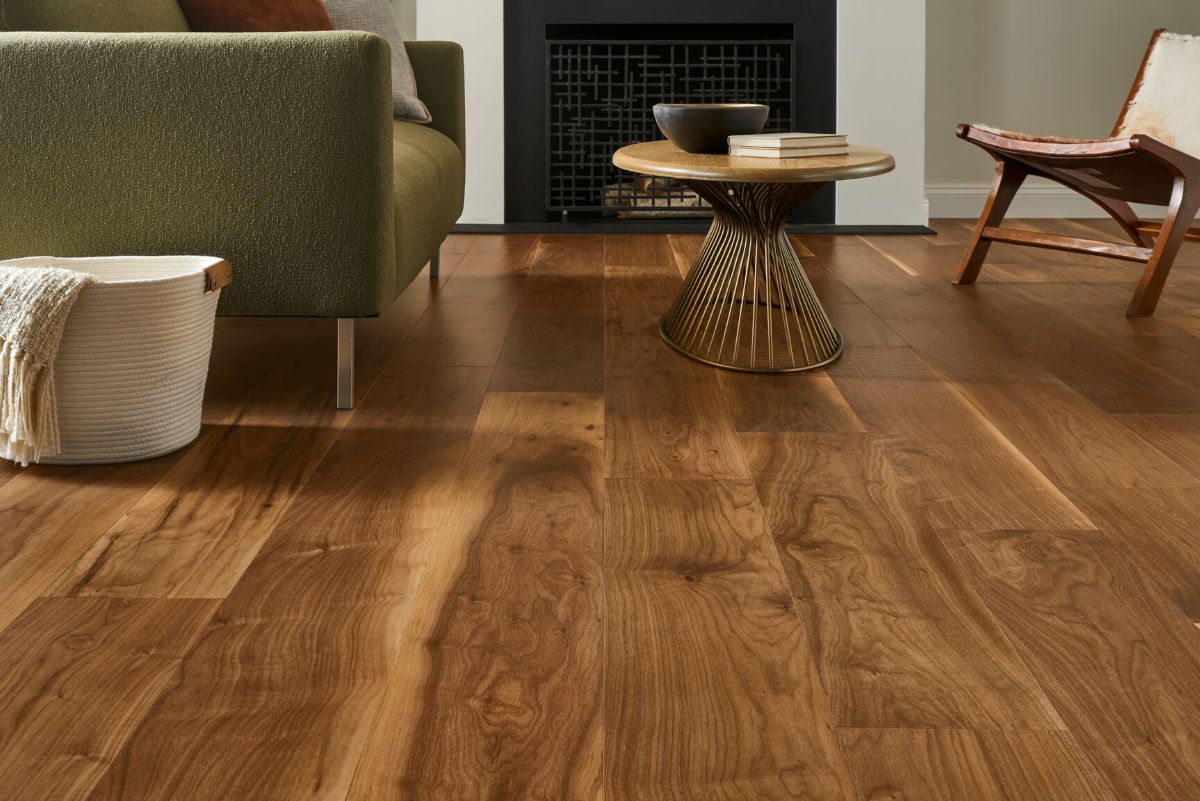
Dogwood Pro™ offers six times the dent resistance and four times the scratch resistance of standard engineered hardwoods. It’s the perfect solution for homes with active kids and pets.
Dogwood Pro™: Densified Wood Flooring Built for Everyday Wear
If you love hardwood but want more stability than solid wood, engineered hardwood is often the best solution.
Densified wood uses heat and pressure to compress wood fibers, creating a harder, more impact-resistant surface. The result is real hardwood that performs more like a high-durability floor.
The process produces a denser, more compact material with improved scratch and dent resistance. Learn more about densified wood flooring.
Scratch and Water Resistance Built Right In
Dogwood Pro™ hardened wood flooring kicks scratch, dent, and water resistance up several notches versus standard engineered hardwoods:
- 6X more dent resistance
- 4X more scratch resistance
- Waterproof protection
- Protection against bacteria, mold, and mildew
Plus, you can choose from the most popular hardwood species: oak, hickory, maple, pine, ash, cherry, and walnut.
“Hardened wood flooring changes the game for hardwoods. You get scratch resistance rivaling laminate and LVP. Compressing the wood’s cells also improves water resistance substantially versus everyday engineered hardwoods.” – Travis Bjorkman, Principal Scientist, Wood, AHF.
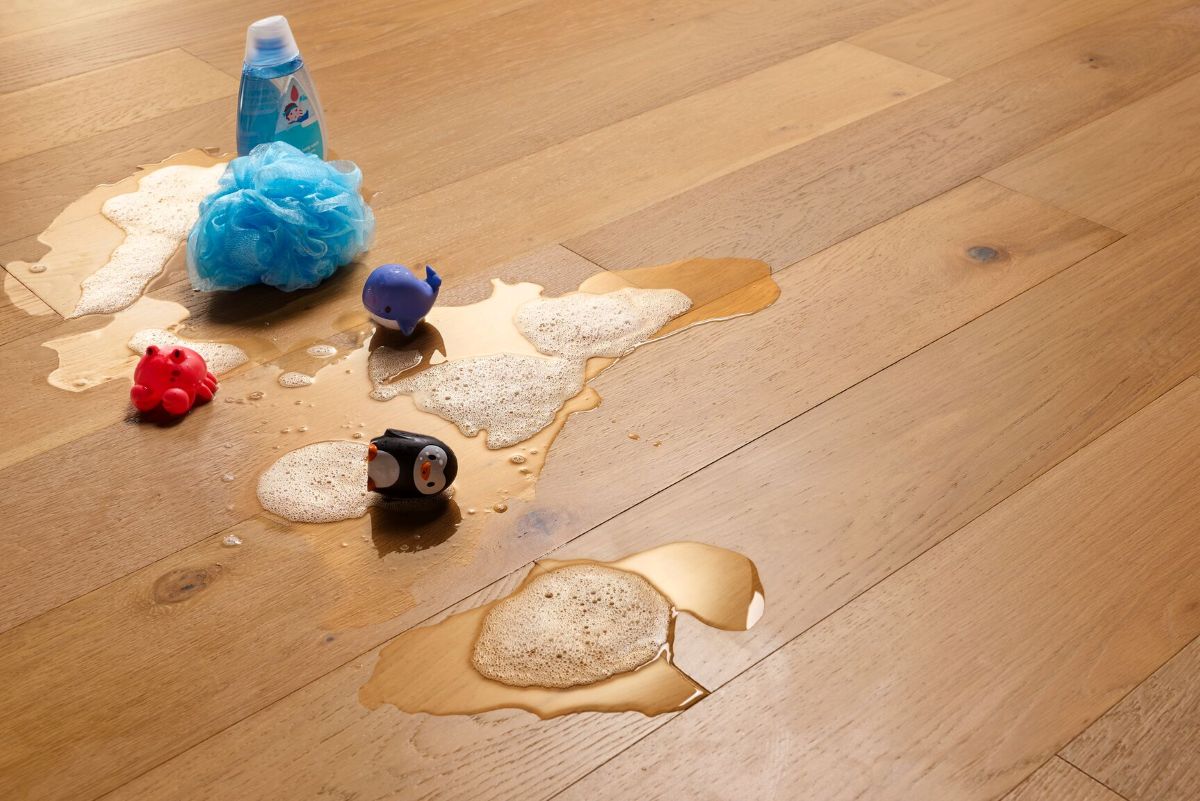
Hydropel® engineered hardwood offers waterproof protection for up to 36 hours.
Hydropel®: Waterproof Engineered Hardwood
For homeowners who want hardwood but are concerned about spills, Hydropel® waterproof engineered hardwood is a top choice.
It features six water protection dimensions to keep the plank’s surfaces (and the hyper-dense core) safe from water damage. You get waterproof protection top to bottom for 36 hours.
You can use the flooring anywhere in your home, even in bathrooms.
“Hydropel is a great option for homeowners who love hardwood but want more peace of mind. It brings real wood style into spaces where people normally hesitate, like kitchens and busy family areas.”
– Devon McGrorty, Marketing Manager, AHF.
Choosing the Most Durable Flooring That Looks Like Wood
If your goal is the longest-lasting wood-look flooring, porcelain tile typically outlasts other options in wet and high-traffic areas.
LVP and laminate offer strong durability, easier installation, and comfort underfoot.
For homeowners seeking authentic wood, engineered hardwood options such as Dogwood Pro and Hydropel offer improved performance over traditional hardwood.
No matter what option you choose, today’s flooring market makes it easier than ever to get the warm, natural wood look you love, without sacrificing performance.
FAQs: Most Durable Flooring That Looks Like Wood
What is the most durable wood-look flooring?
Wood-grain porcelain tile is widely considered the most durable option because it resists scratches, dents, water, and stains.
What is the best alternative to hardwood flooring?
Luxury Vinyl Plank (LVP) is a strong alternative because it offers durability, realistic wood visuals, and water resistance.
What flooring looks the most like real wood?
High-end LVP and modern wood-look porcelain tile can both look remarkably close to hardwood, especially with textured surfaces and natural color variation.
What is the strongest, most durable flooring?
Porcelain tile is among the strongest flooring materials overall, especially in high-traffic or moisture-prone environments.