
10 Wood Flooring FAQs for Hardwood Floor Care
By AHF | By Bruce® Flooring Experts
Published: April 10, 2026
Key Takeaways
- Hardwood floors can last for decades with proper care.
- Cleaning is simple: sweep, vacuum, and use wood-safe cleaners.
- Engineered hardwood is durable and can be refinished depending on the wear layer.
- Moisture management and protective finishes are key to long-term performance.
Hardwood flooring is still the gold standard for style and durability — in fact, 66% of U.S. homeowners say it’s their top flooring preference (NWFA). Bruce®, trusted since 1888, knows homeowners have plenty of questions before choosing wood. Here are answers to the most frequently asked questions.
1. Are engineered hardwood floors durable?
Yes. Engineered hardwood combines a real wood surface with a stable, multi-layer base, making it less susceptible to expansion or contraction due to changes in temperature or humidity. This stability makes engineered floors a wise choice for areas like basements or kitchens.
2. How do you clean wood floors?
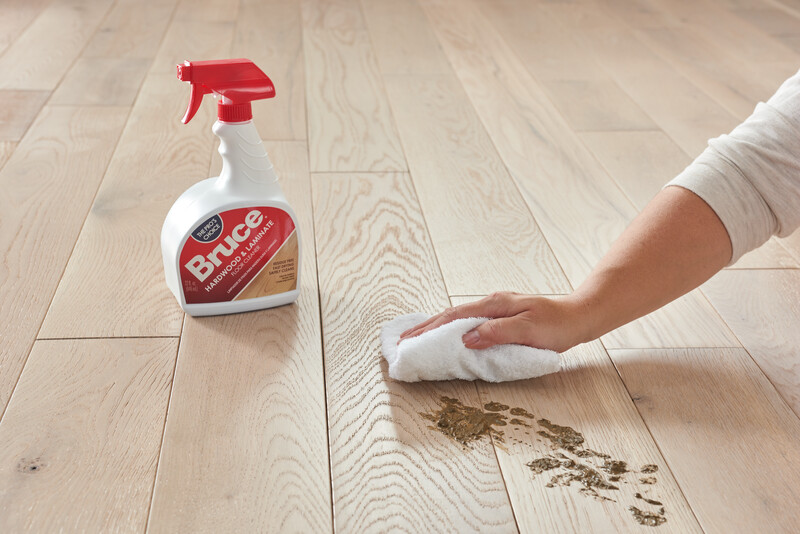
Sweep or vacuum regularly to remove dirt and grit. For deeper cleaning, use a damp microfiber mop and a manufacturer-approved hardwood floor cleaner. Avoid using steam mops and harsh chemicals, as they can damage the finish.
3. Are hardwood floors pet-friendly?
Yes, but preparation is key. Keep pets’ nails trimmed, place rugs in high-traffic areas, and consider hardwood with enhanced durability. Bruce® offers Dogwood Pro® with Densified Wood Technology, a breakthrough that makes real wood up to 4 times more scratch-resistant and 6 times more dent-resistant, perfect for homes with dogs and kids.
4. How long does hardwood flooring last?
Solid hardwood can last 50–100 years with proper maintenance, while engineered hardwood generally lasts 20–30 years. The difference comes down to refinishing potential and installation environment.
5. Can engineered hardwood be refinished?
It depends on the thickness of the veneer layer. Many engineered floors can be refinished once or twice, but thinner wear layers may not allow sanding. Always check product specifications before refinishing.
6. How do you restore or refinish hardwood floors?
Solid hardwood can be sanded and refinished multiple times to refresh its look or change its color. Engineered hardwood may be refinished if the top ply is thick enough. For optimal results, professional sanding is recommended.
7. Are hardwood floors hard to maintain?
Not at all. Regular sweeping, occasional mopping with approved cleaners, and quick cleanup of spills are usually enough. Protective pads under furniture also prevent dents and scratches.
8. How does moisture affect hardwood flooring?
Wood expands when exposed to excess moisture and contracts when dry. To prevent warping or cupping:
- Use engineered hardwood in moisture-prone areas.
- Clean up spills immediately.
- Maintain consistent indoor humidity levels.
9. Is wood flooring hypoallergenic?
Yes. Unlike carpet, wood floors don’t trap dust, pollen, or pet dander. This makes them a healthier option for individuals with allergies.
10. Can sunlight damage hardwood floors?
Yes. Prolonged exposure to direct sunlight can cause hardwood floors to fade or change color over time. Darker stains may lighten, while lighter woods can develop a slight yellowing. To minimize fading:
- Use area rugs in sunlit spaces.
- Close blinds or curtains during peak daylight hours.
- Choose hardwood floors with UV-resistant finishes, which help protect against discoloration.
Final Thoughts on Wood Floor Care
Caring for hardwood doesn’t have to be complicated. With a few simple habits, your floors can stay beautiful for decades. Bruce® has been helping homeowners enjoy the warmth and durability of wood since 1888. Our floors are built to last.
Ready to care for your hardwood floors the right way? Explore http://www.bruce.com for options designed to make everyday life easier.